

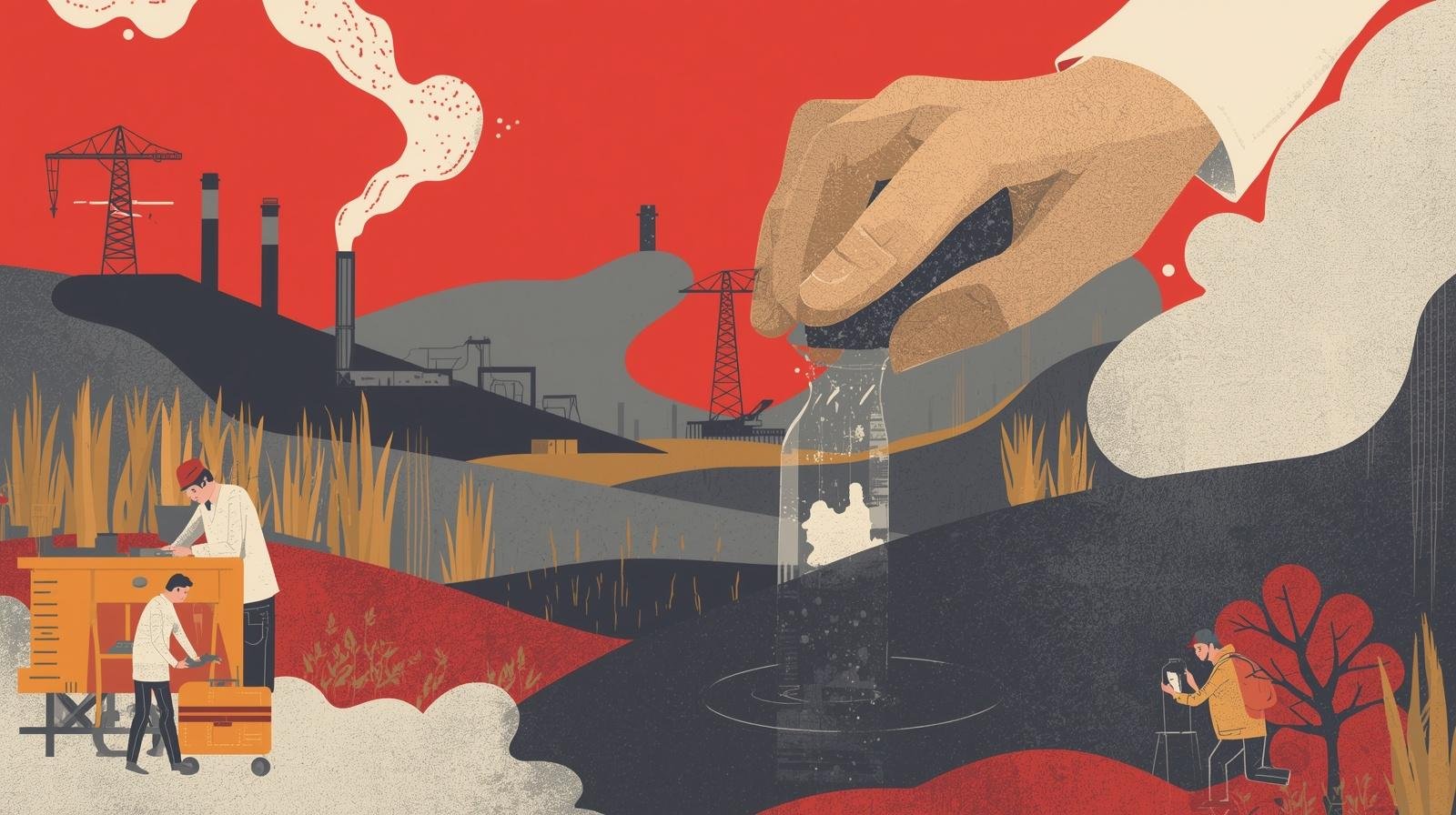
A new report published by the Association for Research and Social Innovation (ADT) sheds light on the complex and long-term environmental consequences of industrial activity in the Municipality of Kakanj. The study shows that the town’s industrial development—based on coal mining, thermal power production, and cement manufacturing—has created a layered system of environmental risks affecting air, water, and soil.
According to the report, the Kakanj Thermal Power Plant, operating since the 1950s and burning around 1.8 million tons of coal annually, together with the Kakanj Cement Factory, represents one of the largest sources of industrial emissions in the region. During winter temperature inversions, polluted air becomes trapped in the valley, creating severe smog episodes that significantly affect public health.
Long-term exposure to such pollution contributes to increased rates of respiratory illnesses, cardiovascular diseases, and lung cancer among the population. Environmental organizations have also identified the Kakanj power plant as one of the largest emitters of sulfur dioxide (SO₂) in Europe, highlighting the cross-border scale of the pollution problem. Beyond air pollution, the report highlights a legacy of industrial waste and contaminated land.
Decades of coal combustion have produced ash landfills and slag deposits containing heavy metals that can leach into groundwater and rivers. These waste sites pose a persistent chemical hazard, particularly during floods or heavy rainfall events that can release pollutants into surrounding ecosystems. Water pollution represents another critical concern.
The report documents incidents where untreated wastewater and industrial runoff entered local rivers, damaging aquatic ecosystems and threatening drinking water sources. In addition, leakage of heavy metals from mining operations in nearby Vareš has been identified as a risk for the wider river system connected to Kakanj.
The research also draws attention to new industrial projects that could introduce additional environmental risks. Proposals for facilities processing animal by-products have raised concerns among citizens and environmental groups about the potential handling and disposal of hazardous waste materials.
ADT emphasizes that Kakanj’s environmental challenges are not only the result of current pollution but also of decades of accumulated industrial impacts that require long-term remediation, stronger monitoring systems, and transparent environmental governance.
The findings underline the importance of integrating environmental protection into local development strategies and strengthening cooperation between citizens, institutions, and industry in addressing industrial pollution risks.